
Interview with architect
Peter Topinka
about Danubius Lofts
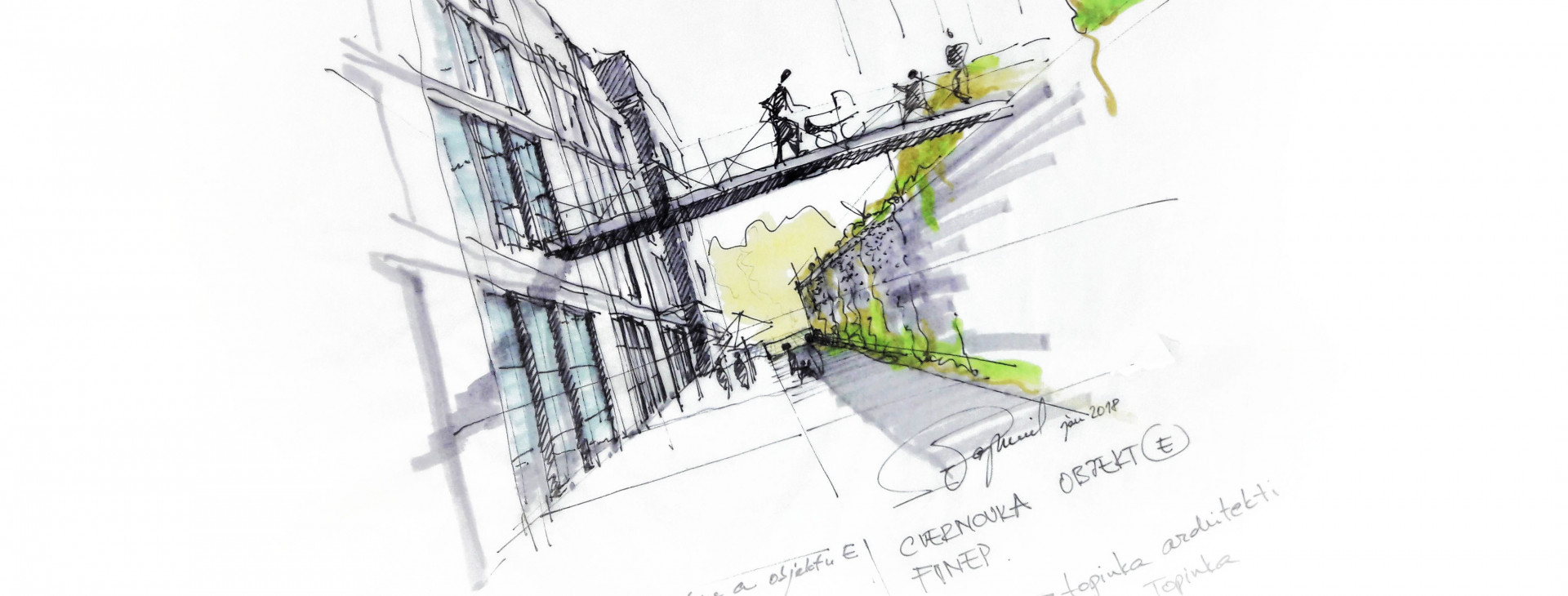
A heritage-protected building of a former Bratislava spinning mill will be transformed into a unique loft-style residence
The preparation of this exceptional residential project, inspired by the genius loci of the former industrial area in Ružinov, was accompanied by lengthy and demanding negotiations with heritage authorities. The redevelopment required a number of unconventional architectural solutions.
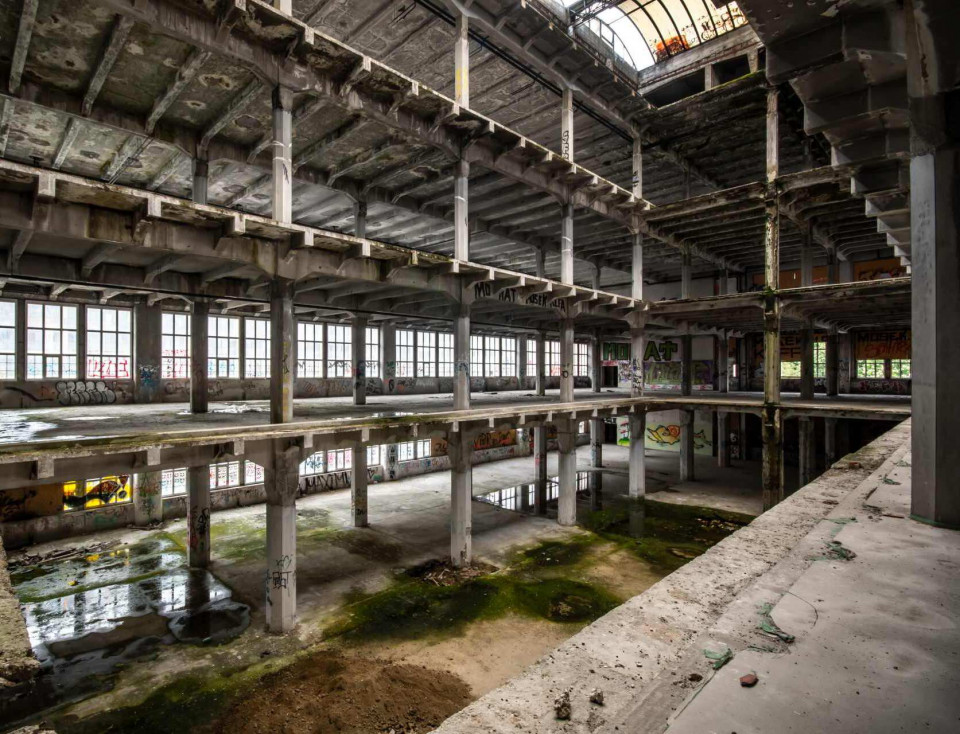
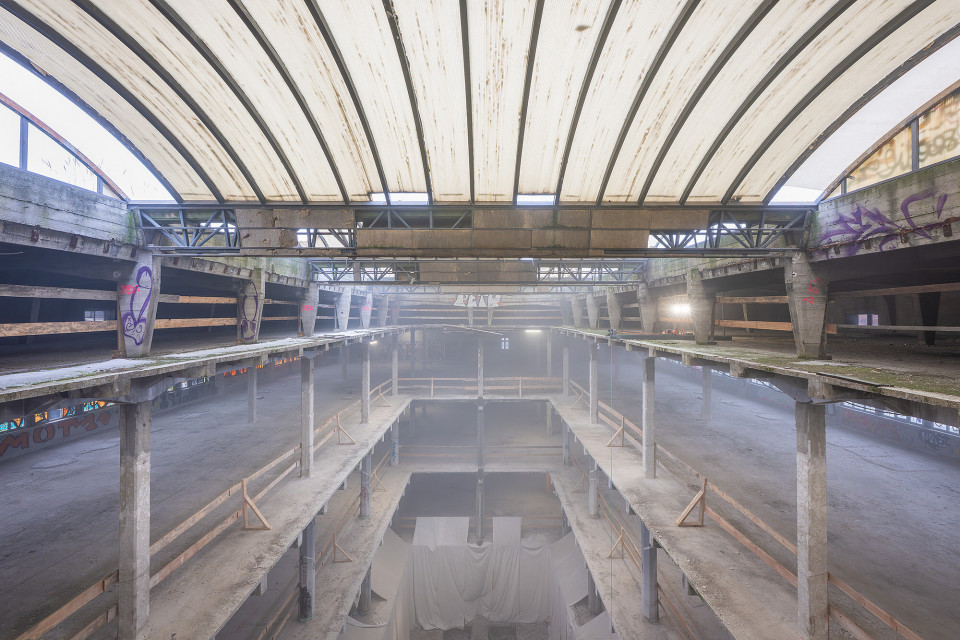
The “Pink Castle,” as the early 20th-century factory building is nicknamed, had been deteriorating for years and locals avoided it entirely. When architect Peter Topinka from the studio Topinka Architekti visited it for the first time, the former spinning mill in Bratislava’s Ružinov district was in a catastrophic condition. “We had to bring security with us,” he recalls. Inside, people experiencing homelessness were living there, the windows and doors were broken, and the façade was scorched after a fire that broke out during one of the events when the building—temporarily used for concerts—caught fire. “All the children in the area know they’re not allowed to go there. And now we’re going to turn it into the exact opposite—a place everyone will want to visit,” he adds.
You won’t find anything like it in Bratislava
Topinka joined the Danubius Lofts project, part of the larger Danubius residential complex, at a point when the developer FINEP was not satisfied with a proposal from another architectural studio. He did not want to rewrite his colleagues’ work, so he came up with his own concept. The original factory spaces will be transformed into lofts that preserve the building’s industrial character, while a modern two-storey rooftop extension with apartments will be added. “It’s an exceptional building. It can’t simply be renovated and converted into apartments. We have to do it as well as possible, because you won’t find anything like it in Bratislava,” he says.
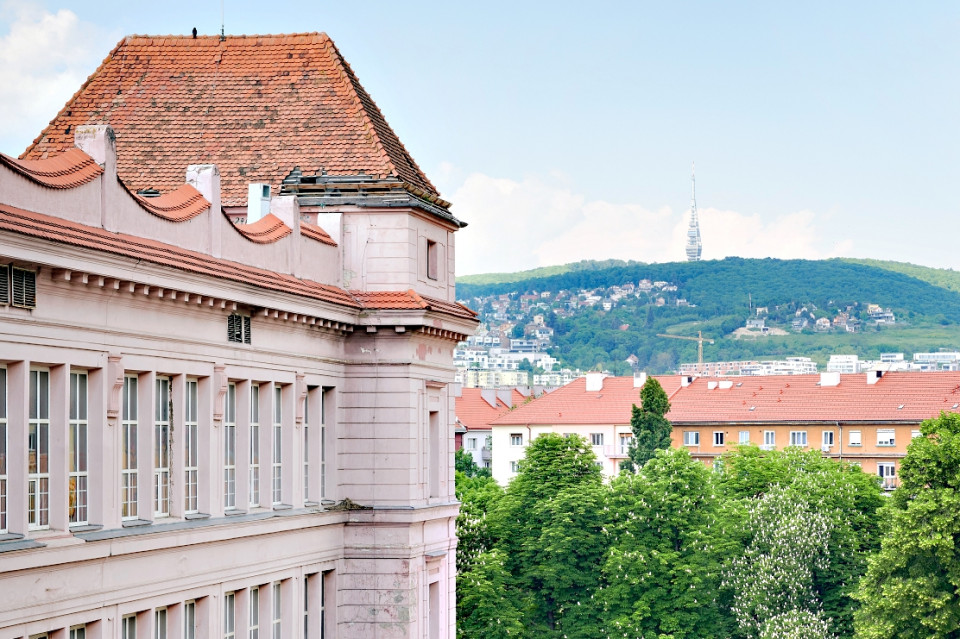
The Pink Castle is a reminder of the industrial era
The four-storey building from 1909 was designed by Austrian architect Julius Mayreder as a thread factory with extensive production halls. Originally named the Danubius Factory, it was part of a large industrial complex of the Hungarian Thread Works. The nickname “Pink Castle” came later—both due to the hundreds of women who worked there and its distinctive pink façade. This color, however, only appeared during the socialist era; originally, the building had a more subdued grey-beige tone.
The Entrance Hall as a Cathedral
The building has been a national cultural monument since 2008, which meant lengthy negotiations with heritage authorities for Topinka, along with persuasion and the search for compromises. Every intervention had to be justified—from the new staircase to glass railings and the modification of the atrium. “This isn’t a building you simply design and construct. We had to fight for every detail, but we knew that if we didn’t do it properly, life would never return inside.”
Topinka considers a turning point in the negotiations with heritage authorities to be the moment when he succeeded in transforming the empty space at the center of the building into a fully-fledged atrium.
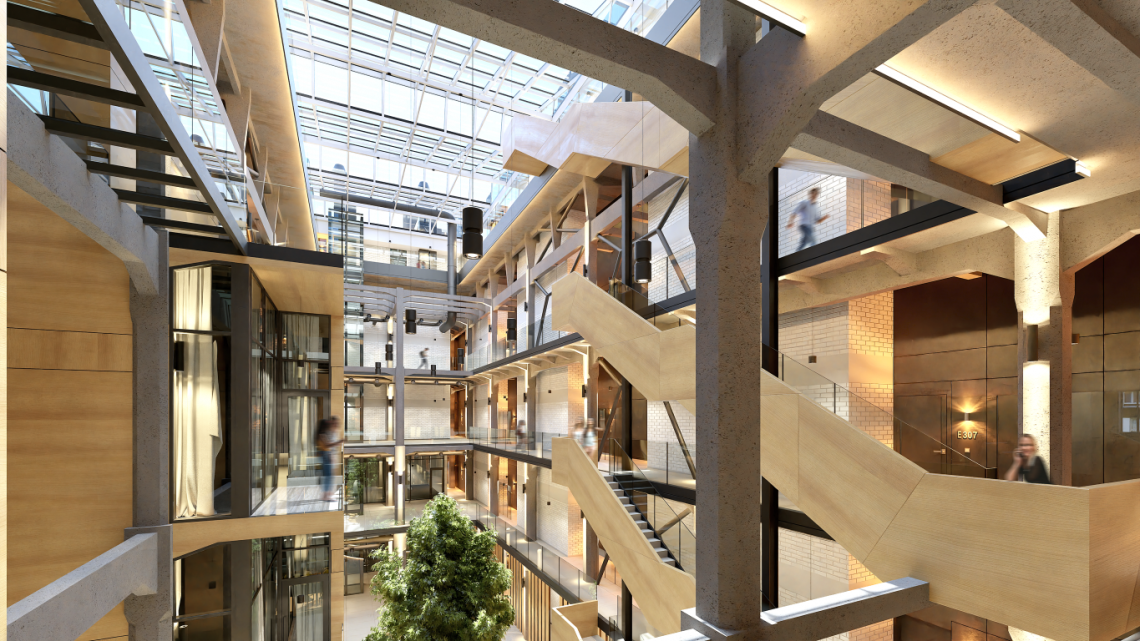
“In the initial design, there were apartments all around on every floor—creating an ordinary atrium with galleries. But I told myself it couldn’t be just another gallery-access building. It had to be a house with an internal gallery,” he recalls. “The roof structure resembles a cathedral vault, allowing natural light to flow in.”
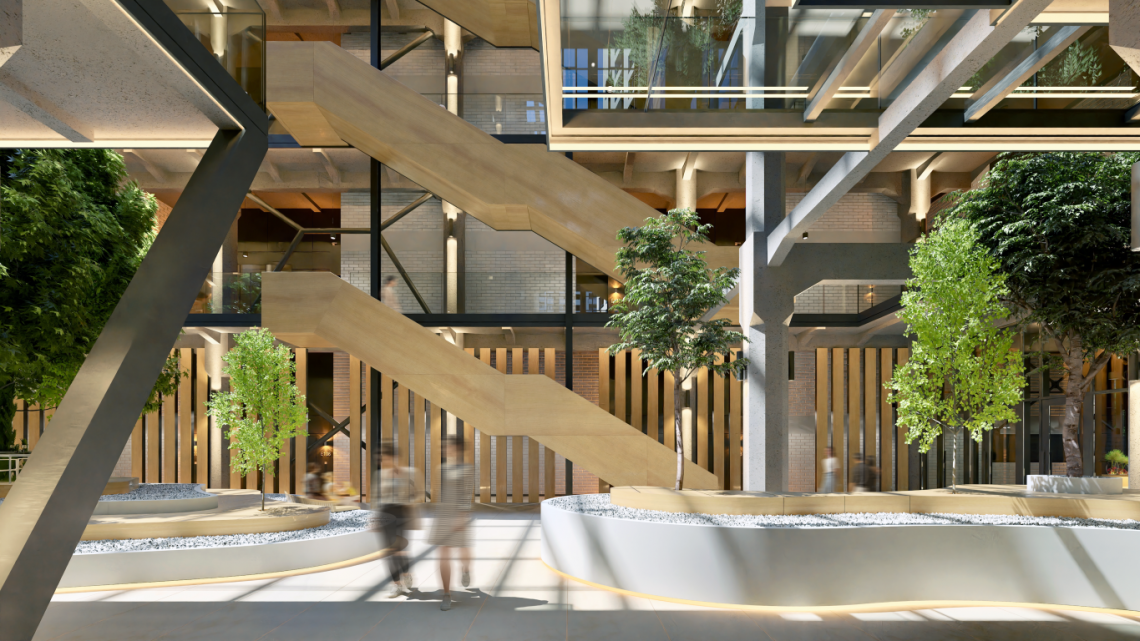
According to Topinka, the atrium is the most important element of the entire project. He drew inspiration from European urban passages, such as those in Milan, known for their calm atmosphere and the way natural light falls onto the floor.
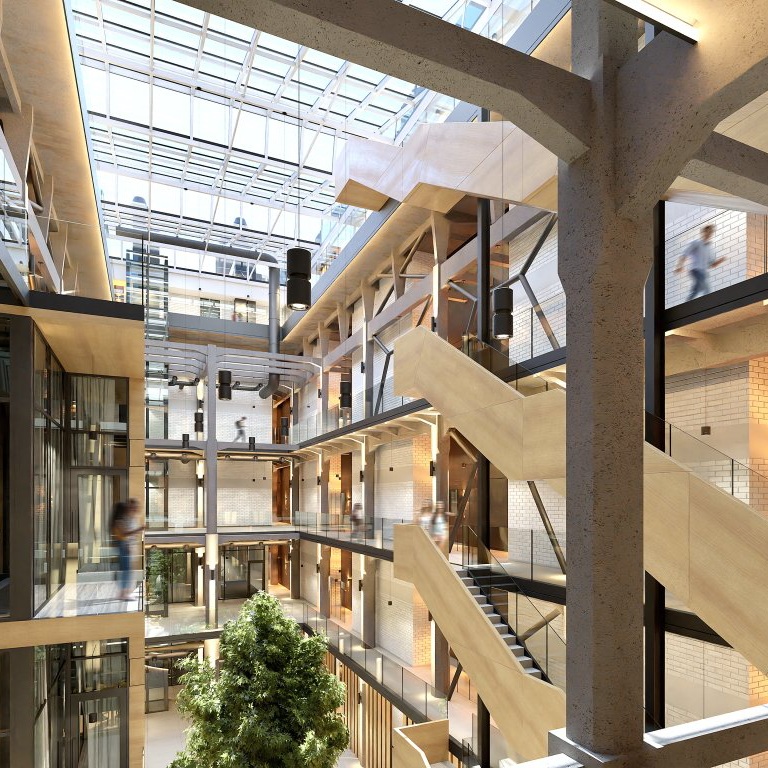
It is the heart of the building’s overall urban design. It brings life into the space.
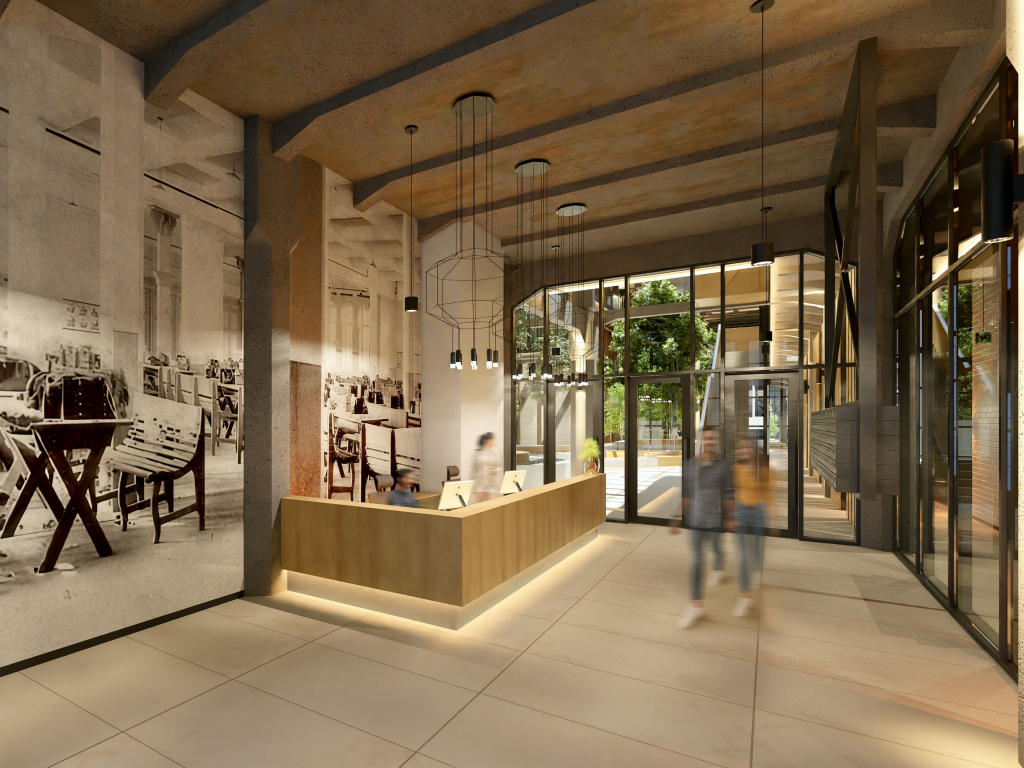
To create such a space within the Pink Castle, the architect had to redesign the internal layout of the entire building. The narrowed atrium was angled toward the sun to allow more natural light in. The result is a foyer that functions as a generous entrance hall and resembles a cathedral nave. “When you enter a typical apartment building, you’re met with mailboxes and an elevator. Here, you are welcomed by an airy, open space right from the entrance. The roof structure resembles a cathedral vault, allowing natural light to flow through.”
A key feature of the atrium is the glass railings on every floor—they do not disrupt the visual perception of the space’s width and preserve its openness. “The moment you add a traditional railing, the bars begin to overlap and create a surface you can’t see through,” Topinka explains, describing his choice of glass. The space will also include a panoramic elevator and an open staircase connecting all floors, including the garages and the rooftop extension. Interior greenery will also be incorporated into the atrium.
“When you arrive, it should take your breath away.” The architect believes that it is at the entrance to the atrium that one first realizes this is not an ordinary renovation. The roof of the original atrium was raised by one level—from the 4th to the 5th floor. This allows for comfortable, dry access to the luxury apartments in the extension directly from the top level of the atrium. The elevated atrium further enhances the generous character of the gallery, strengthens its architectural impact, and improves the comfort of living in the extension.
Hungarian Manchester
At the turn of the 19th and 20th centuries, Bratislava’s Ružinov district became a major center of textile production in the Austro-Hungarian Empire. Entrepreneurs Salcher and Richter established the first factory here, which began operations on January 17, 1902. The complex consisted of 23 buildings—from dye works and spinning mills to boiler rooms, engine houses, warehouses, and administrative facilities. The operations stretched between what are now Trnavská cesta and Mlynské nivy.
At its peak, more than 2,500 people worked here, mostly women. Cotton, linen, and wool threads were produced and distributed across Europe. The company was originally called the Hungarian Thread Factory, later Danubius, and after nationalization, MDŽ Works. Production continued for more than a hundred years, until 2004. The dominant Pink Castle building still stands today as a reminder of the era when Bratislava’s textile industry held a similar importance for the Hungarian part of the monarchy as Manchester did for England.
A two-storey extension builds upon the original structure. Topinka designed it to preserve the silhouette of the historic building. It is darker, made from a single material, and conceived with maximum respect for the heritage-protected structure. “Old and new create a perfect symbiosis here,” Topinka emphasizes as one of the key strengths of the redevelopment. “In low light and in the evening, you will hardly notice it from the outside,” he explains. This effect was achieved through the choice of a dark façade tone. The setback of the extension’s façade further underlines its subordinate role to the original architecture while creating generous terraces for the apartments in the modern section. Due to structural load requirements, the extension also had to be lightweight—instead of reinforced concrete ceilings, the architects used a sandwich steel structure.
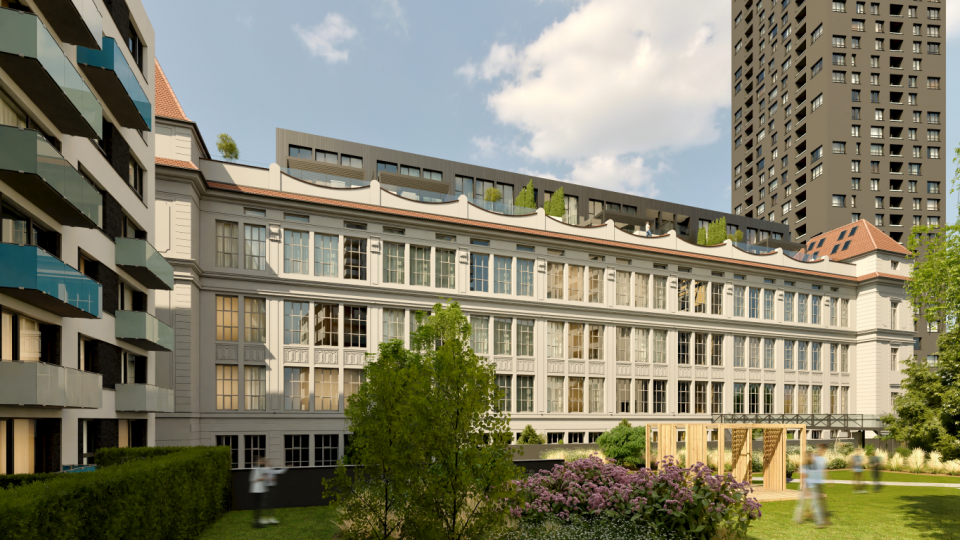
An extension that disappears into the dusk
A Project Like a Puzzle
Topinka and his team had to solve a wide range of technical challenges. The acoustic solution required separating the old and new parts so that vibrations would remain within the structure. The high ceilings, in turn, complicated heating. “The project was one big puzzle. The building is completely atypical, and everything in it works differently. But once we solved all the pieces, it finally started to come together,” says the architect.
“This building is unique. You can’t replicate it, because it has history and patina. But when approached the right way, it becomes something with a soul.”
One of the greatest technical challenges was the atrium with its glass roof. It serves as a gently tempered zone that naturally works with both light and heat. Thanks to an internal skylight and ventilation system, light enters in carefully controlled intensity, while heat is dissipated to ensure comfort even on the upper floors during hot summer days. “We wanted to create a space that feels generous yet remains comfortable all year round. In summer, this means controlled airflow that keeps the space fresh,” Topinka explains.
Another key aspect was ensuring that the building becomes a fully functional residential project, despite being a heritage-protected structure. This naturally brings several limitations. For such buildings, an energy certificate is not required, standard thermal and acoustic regulations do not apply, and heritage authorities often insist on original materials—even if their performance is significantly lower.
“If you’re told you must preserve an old glass window, you preserve it. If you’re not allowed to insulate the façade from the outside, then you don’t,” says Topinka. However, his team decided to go beyond what regulations require. To provide apartments with the level of comfort expected from modern luxury living, they chose an unconventional solution: insulating the building from the inside. This approach is rarely used in heritage-protected buildings and requires extremely precise design and calculations. “We want people to feel just as comfortable here as in a modern building—only with the atmosphere that only historic architecture can offer,” he adds.
One Building, Dozens of Unique Apartments
Nearly every apartment in the building will be different. Some feature tall factory-style windows, while others offer more privacy. Topinka drew inspiration from abroad but adapted everything to the surrounding Bratislava context. “An industrial building will never be like a new development where all layouts are the same,” he says.
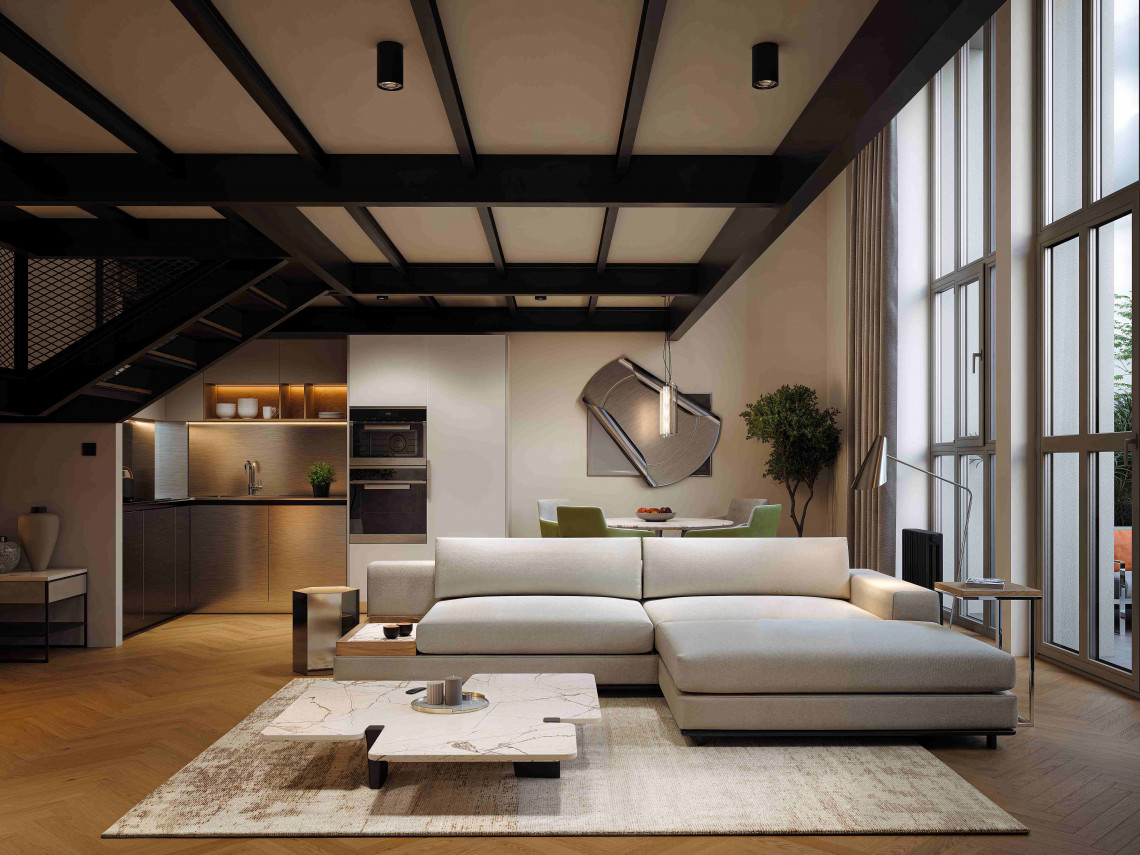
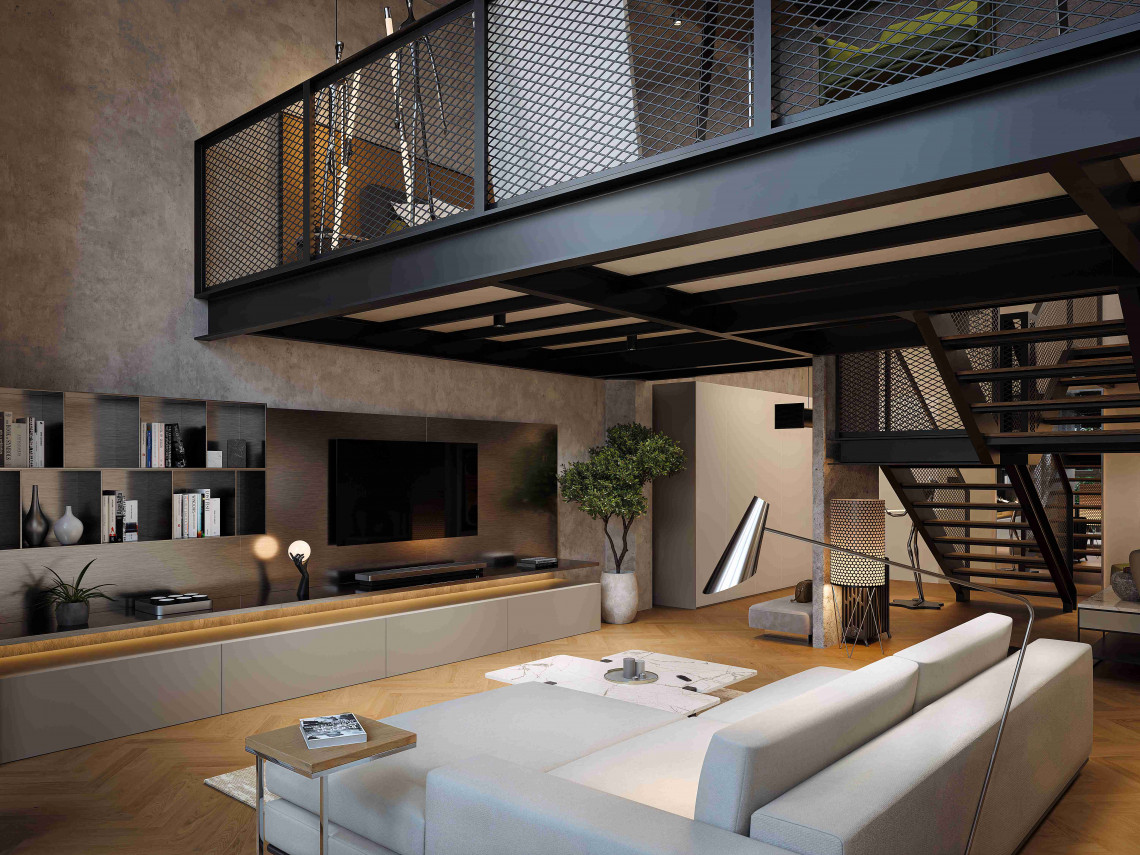
The building will include 73 residential units, of which as many as 53 have a unique layout. “They differ in both floor plan and ceiling height,” he adds. On the ground floor, there are lofts with ceilings high enough to accommodate a mezzanine with a suspended sleeping area. On the second and third floors, single-level lofts with above-standard ceiling heights will be created. And on the fourth floor, ceilings reach heights of 5.5 to 6 meters. “Do you know how high the climbing bars are in a school gym?” Topinka asks. “Four and a half meters. But here, the apartments have ceilings up to six and a half meters high. It’s like living in a studio. But it’s not just about the height—it’s about the feeling of space,” the architect adds.
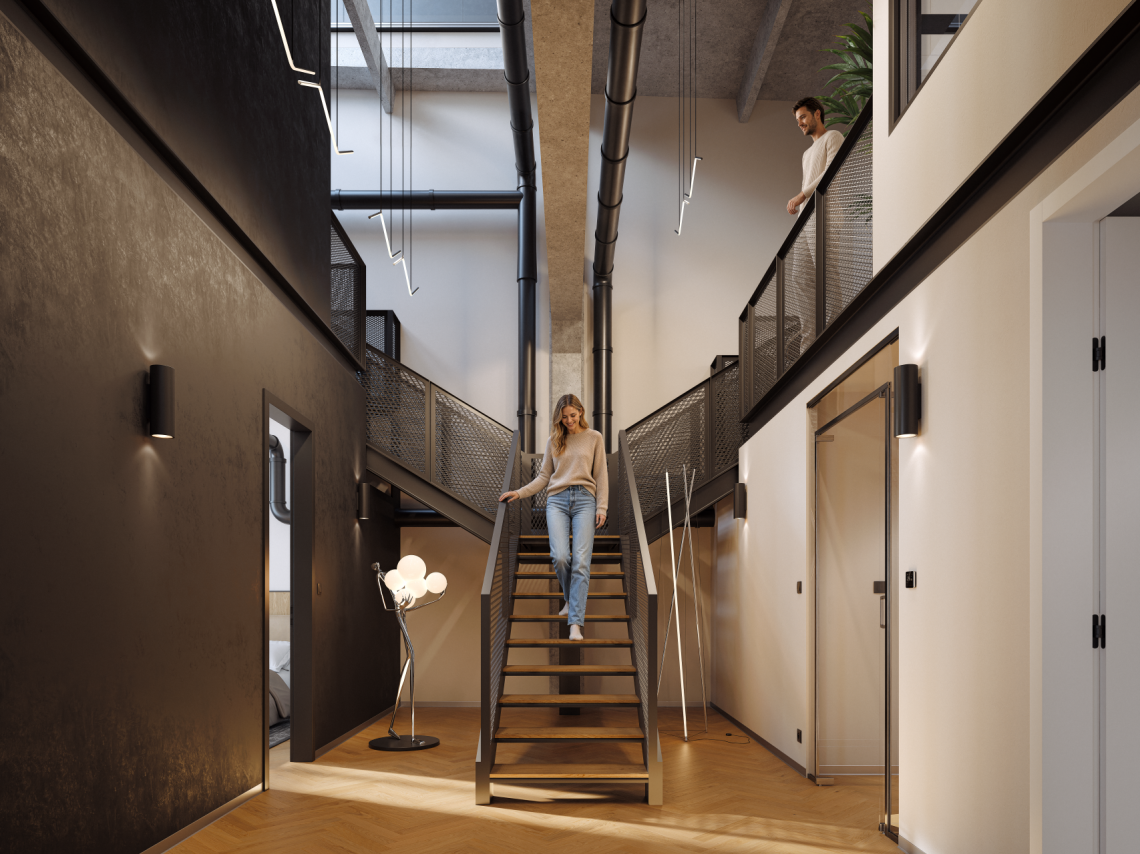
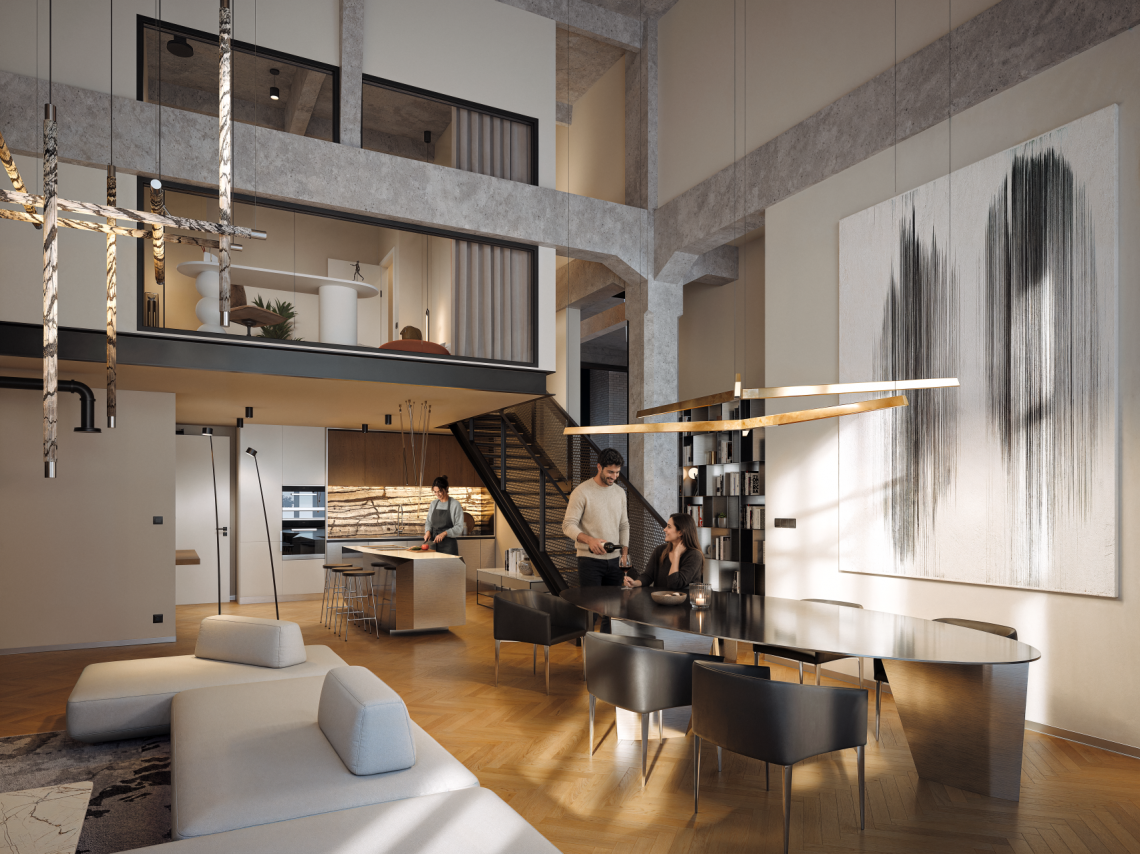
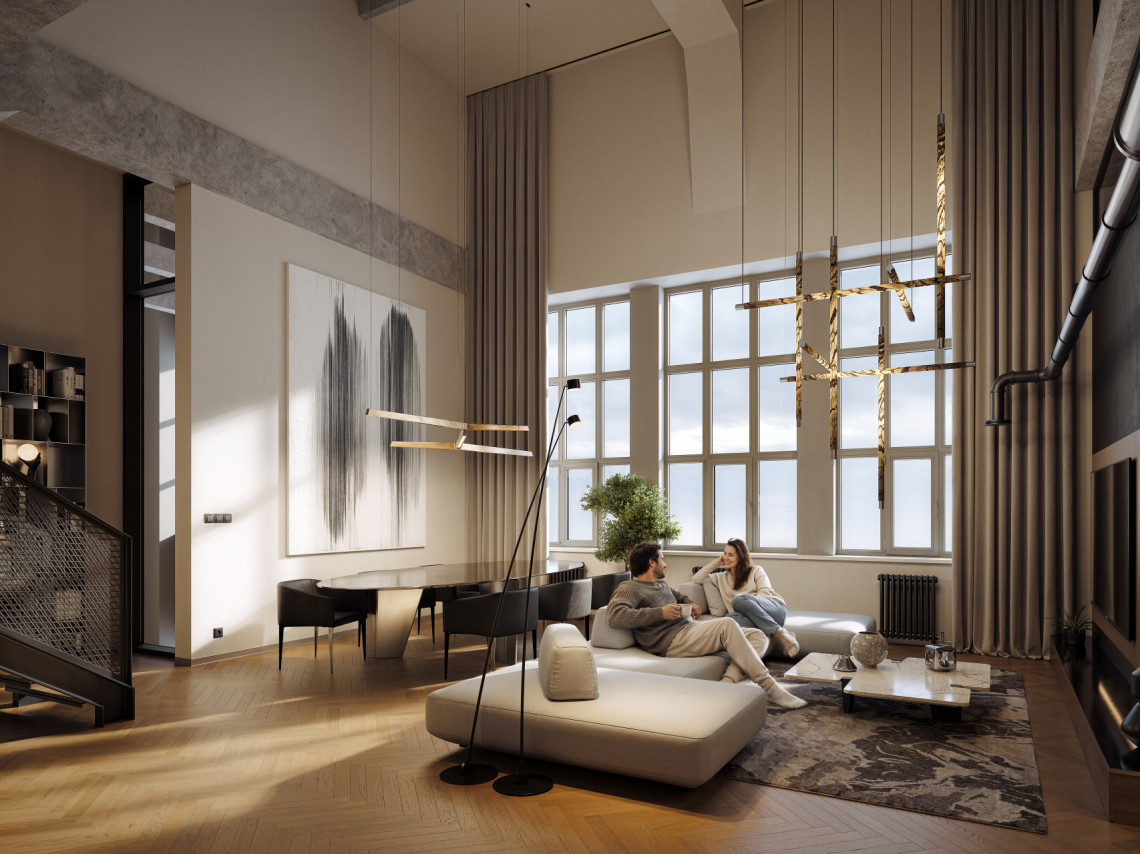
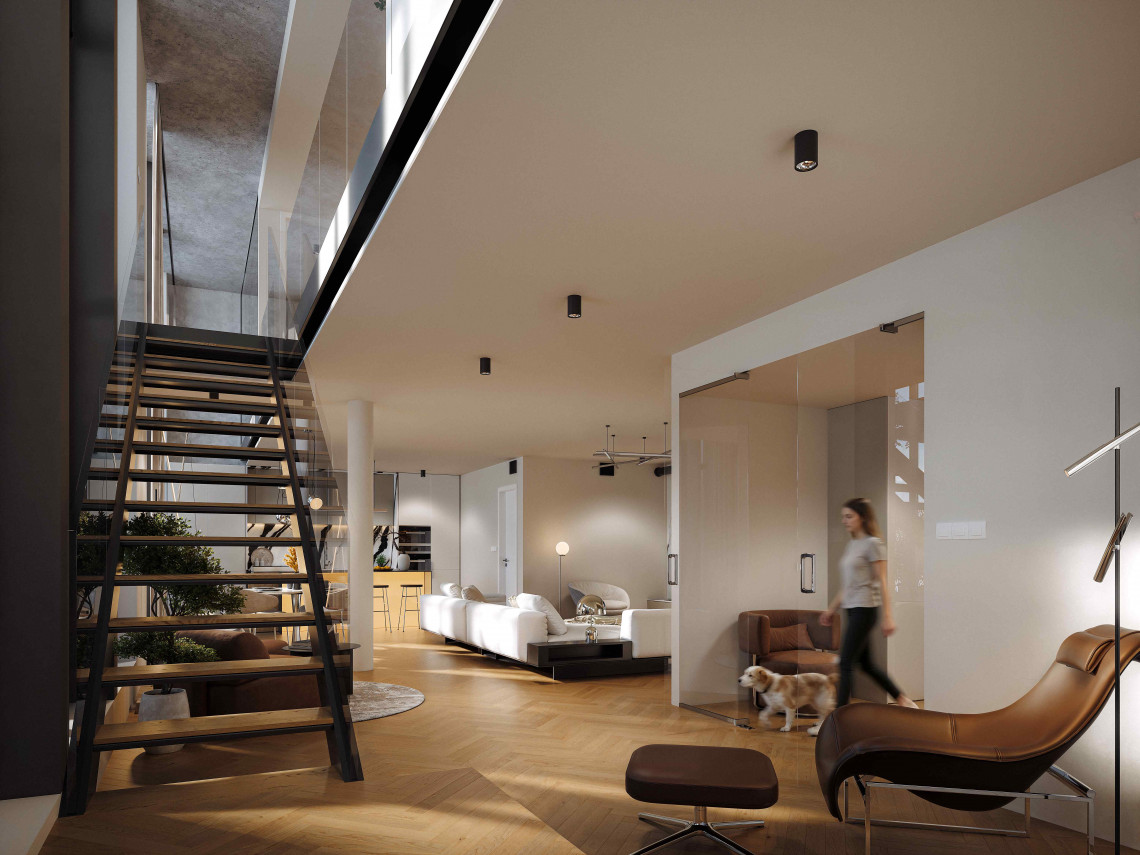
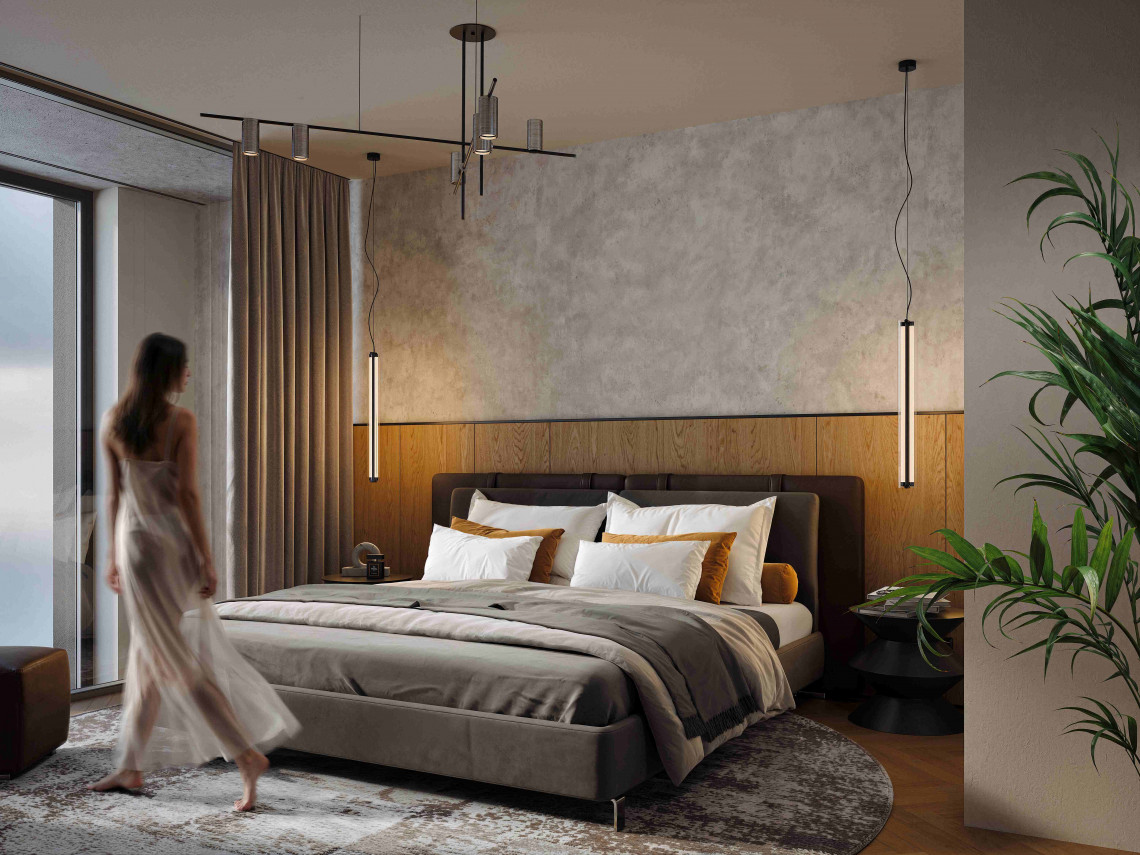
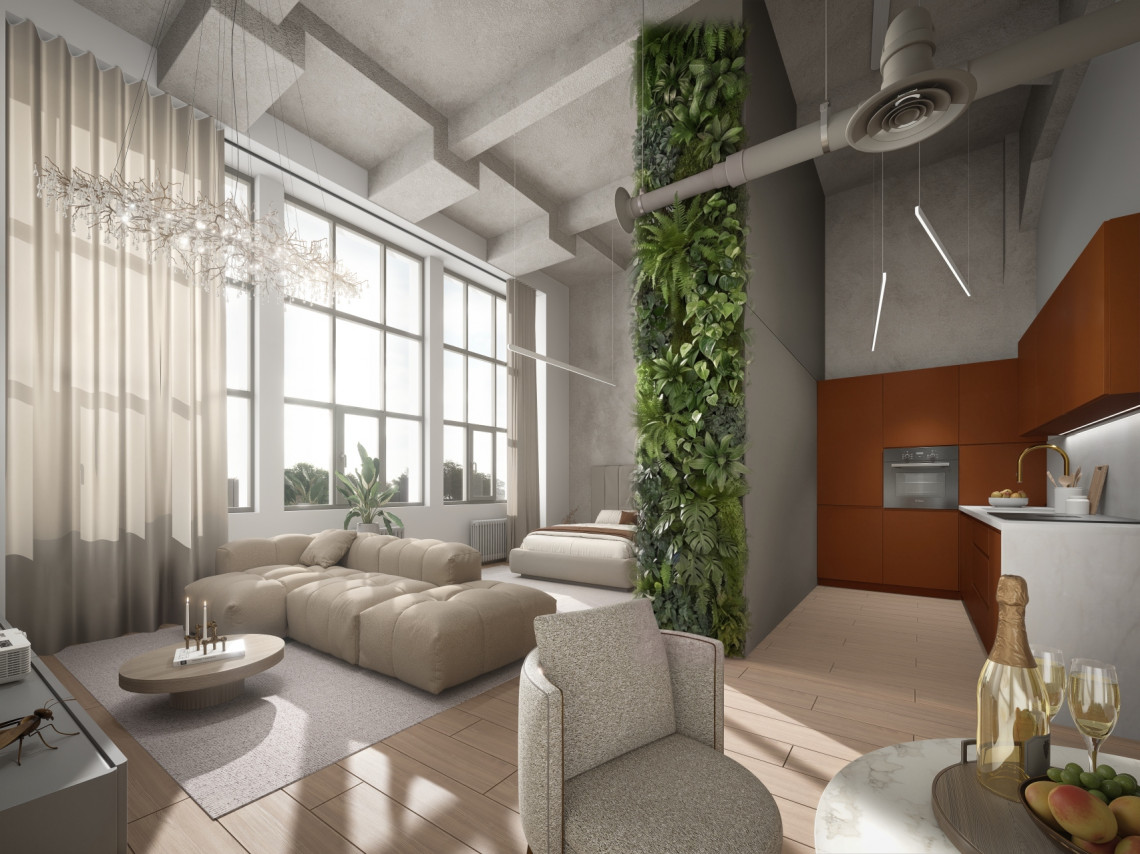
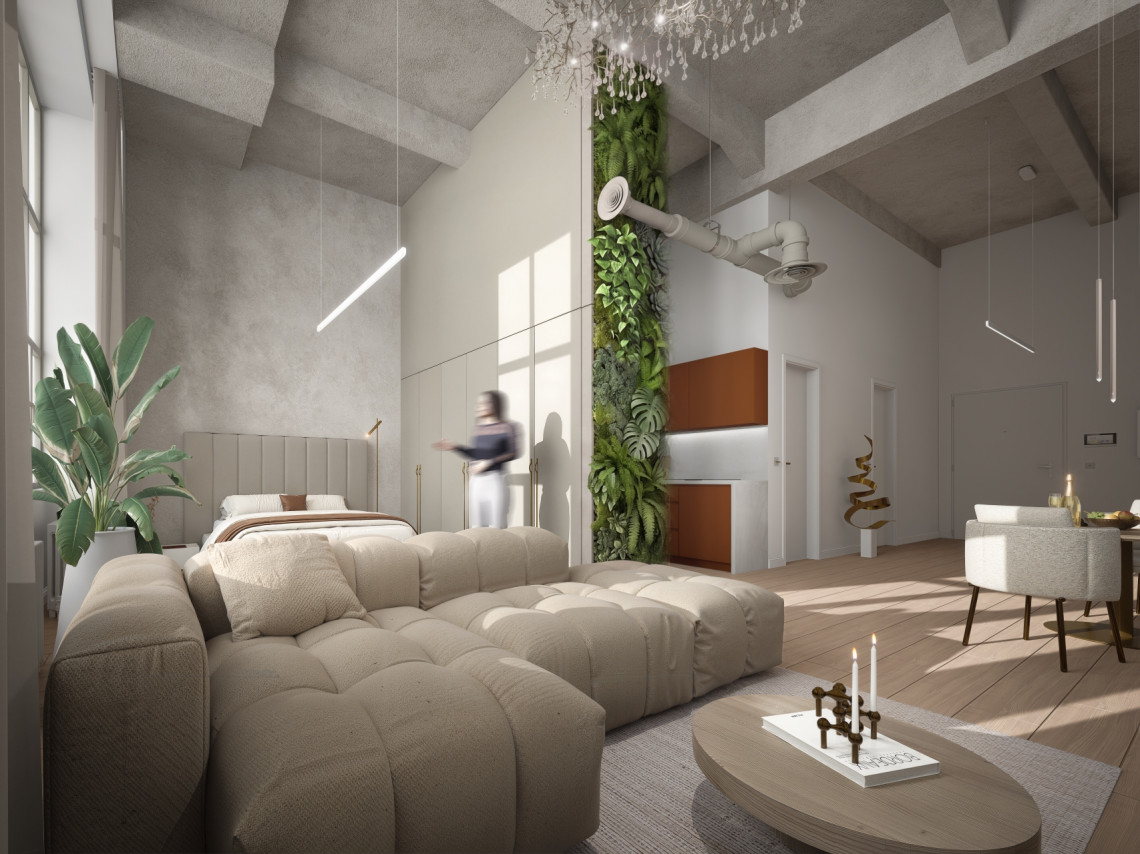
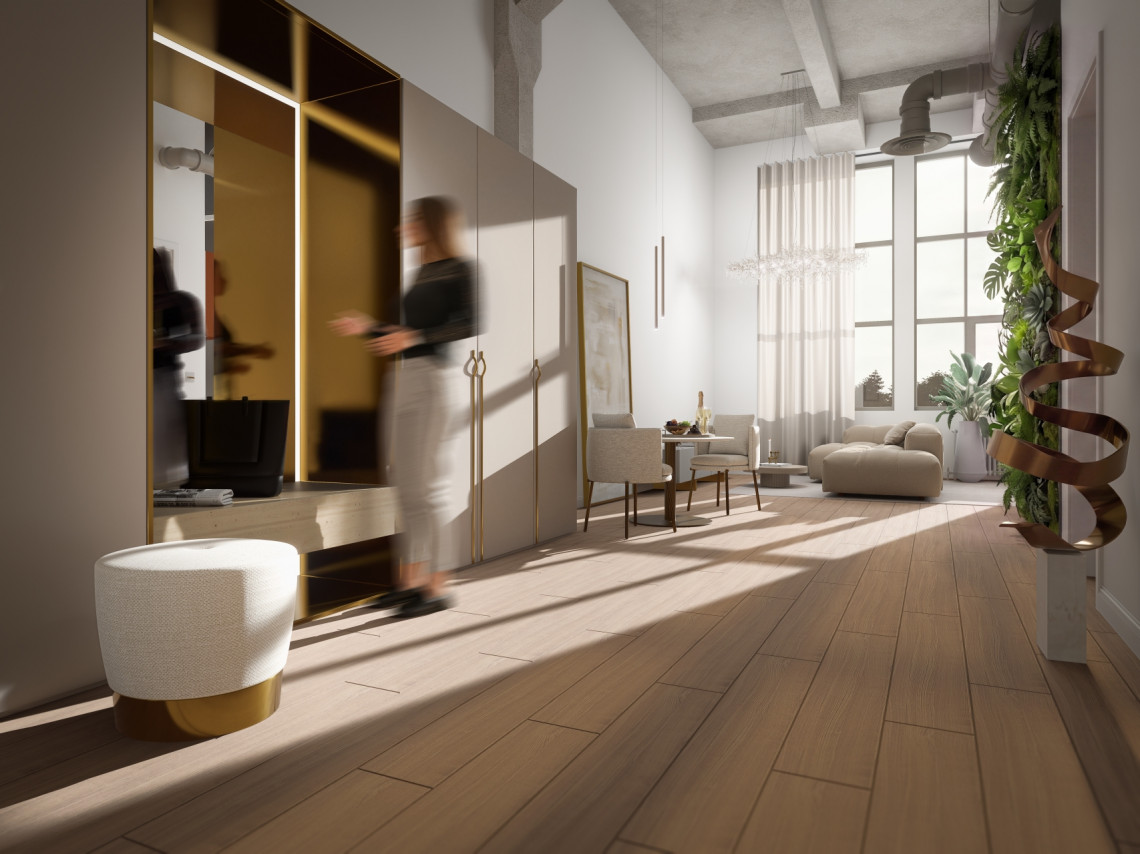
Lofts Will Be Created Exclusively in the Historic Part of the Building
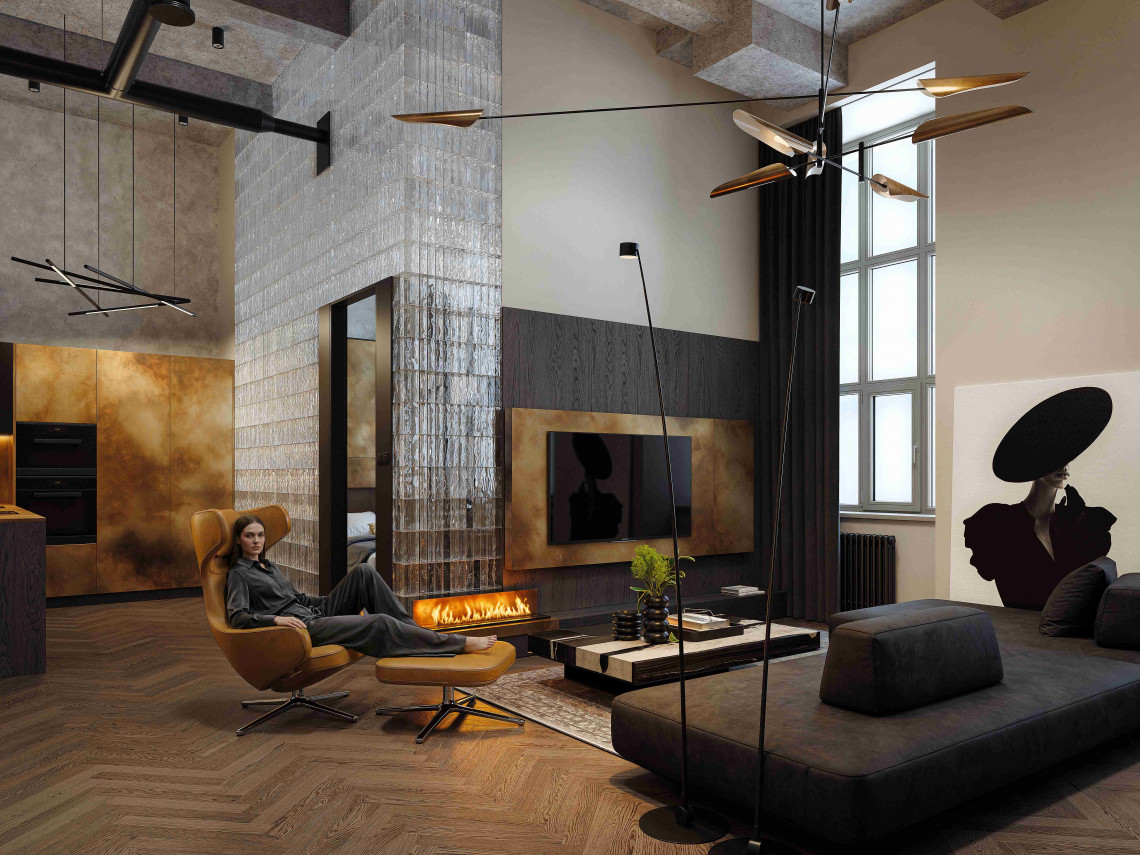
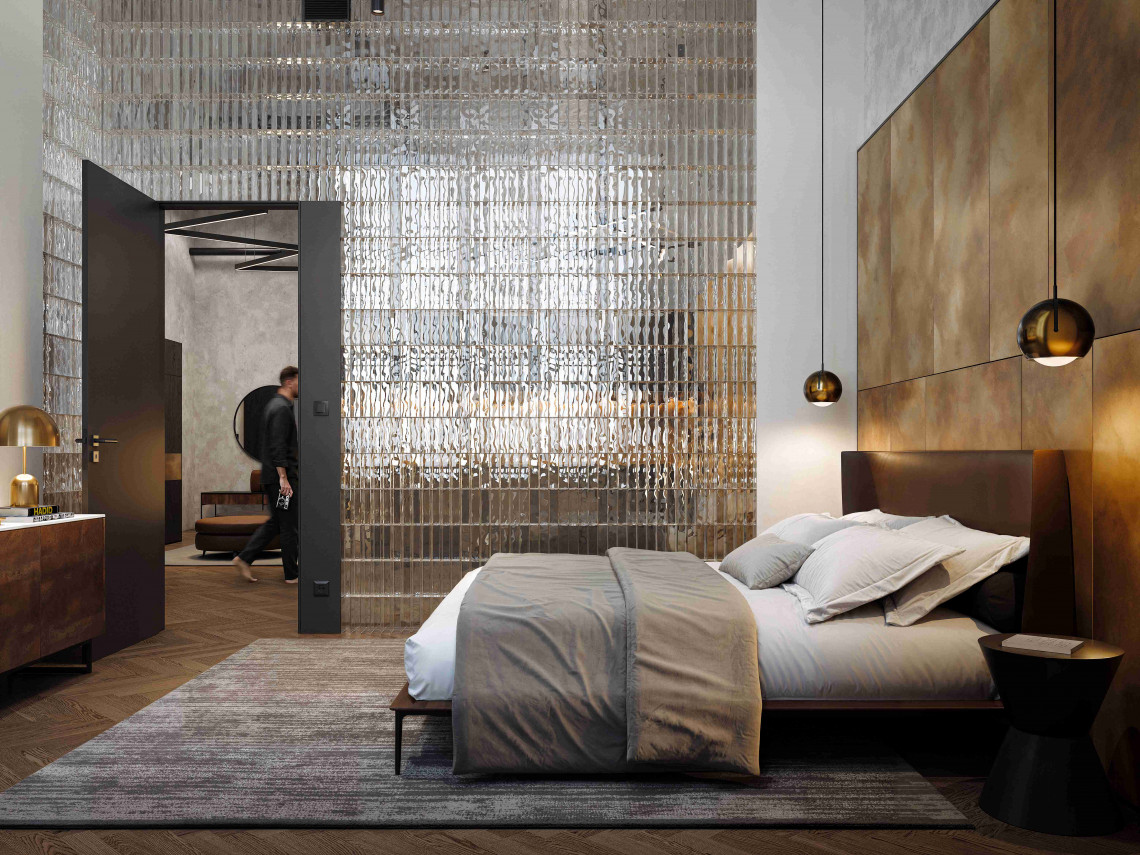
“Their appeal lies precisely in their openness.” According to Topinka, this type of living will be appreciated especially by young people, business travelers, or couples whose children have already left home. Lofts do not follow a traditional room layout, but instead offer an open, breathing space full of freedom and unique character.
“It’s for people who have a bold perspective on living—who choose a property precisely because it is different,” he says.
In contrast, the rooftop extension will feature more conventional apartment layouts, also suitable for families. Even here, however, the designs are highly attractive—apartments with generous, vertically open two-storey living spaces, where a staircase leads to a शांत and private night zone. This area offers views of the city and a sense of living rarely found in standard new developments.
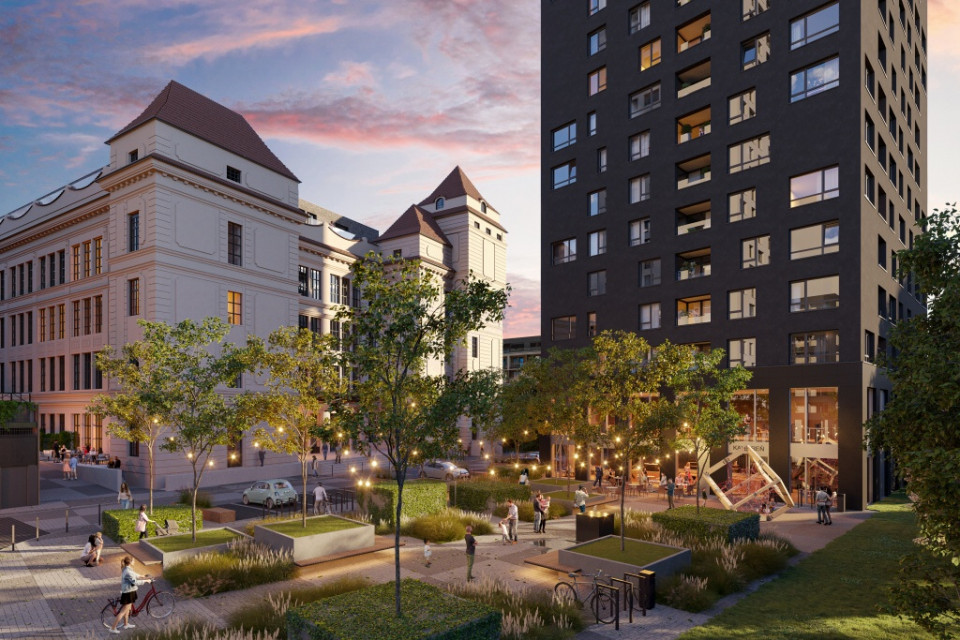
Living in a Former Textile Factory
A new urban district is emerging from the former industrial complex in Ružinov. In the first phase, the 23-storey residential building Danubius One was completed. It is now complemented by two projects with distinct approaches to living and architecture. The first is Danubius Lofts, created within the historic building of the former factory known as the Pink Castle. Just a few meters away, Danubius Two will follow—a high-rise building with 34 floors and a height of 118 meters, making it one of the tallest residential buildings in Bratislava.
Thoughtful Architecture Doesn’t End at the Façade
One of the key aspects of the project lies in the interiors themselves. Topinka says that the opportunity to work not only on the building’s reconstruction but also on the design of individual apartments was one of the main reasons he accepted the offer from developer FINEP. “From the beginning, I was drawn to it—not just to build the exterior, but to shape the interior as well. That is exactly the essence of architecture.”
The atmosphere of the interiors is defined by the building’s distinctive industrial character. Exposed steel structures and intentionally preserved technical details are not flaws here, but features. Topinka aims to reveal how the building works, not to hide its history, and to give the space a uniqueness that typical development projects cannot offer. “You see the cables, you see the structures—not only is that okay, it’s intentional. At the same time, it’s a system that allows the apartment to evolve further. Smart home technology or other premium features can be added depending on the client’s wishes,” Topinka explains.
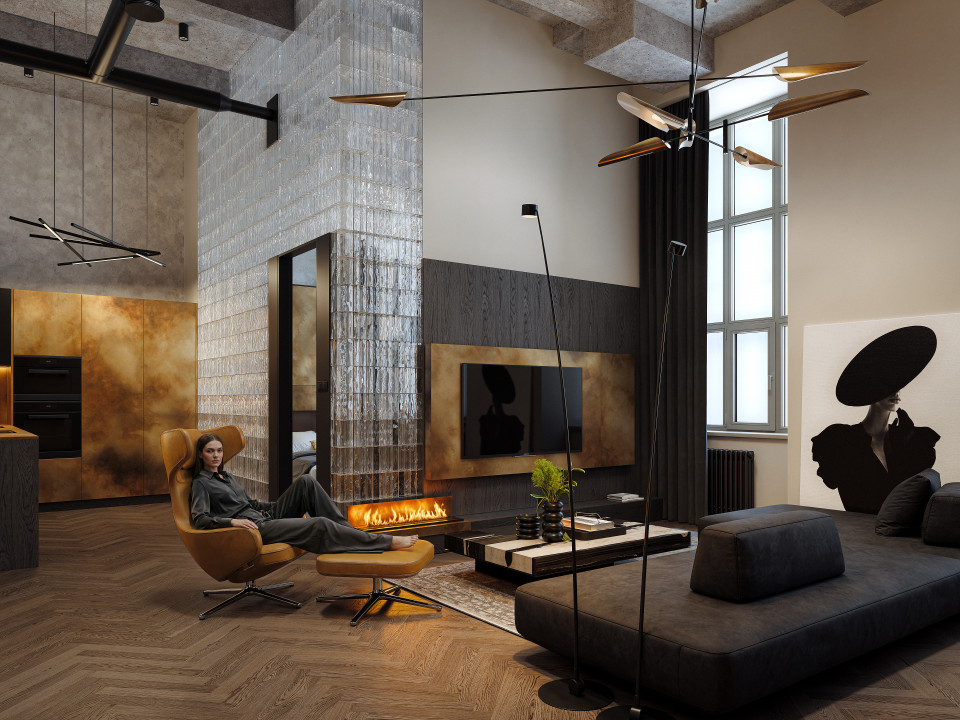
The best architecture isn’t the one you notice. It’s the one you feel.
For future apartment owners, a major advantage is that Topinka and his team know every detail of the building. “We know what we can afford to do without compromising the structure, regulations, or the developer’s standards. We know what will be simple, what will be costly, and what might not be worthwhile. We’ve been working on this building for several years—we know it inside out,” he says. Thanks to this, each interior can turn living into a truly unique experience.
The apartments are designed by the Topinka Architekti team with a specific person in mind—their family background, lifestyle, and budget. “When I design an interior, I try to step into the owner’s shoes. I ask myself: What would I want if I were them? Everyone has different needs. Some people live alone, some have three children, others need a studio,” he says. This approach also guided the transformation of the Pink Castle. “You can live anywhere in a standard way. But here, you can live above standard. An interior designed exactly to your needs is something you simply can’t buy at IKEA,” he adds.
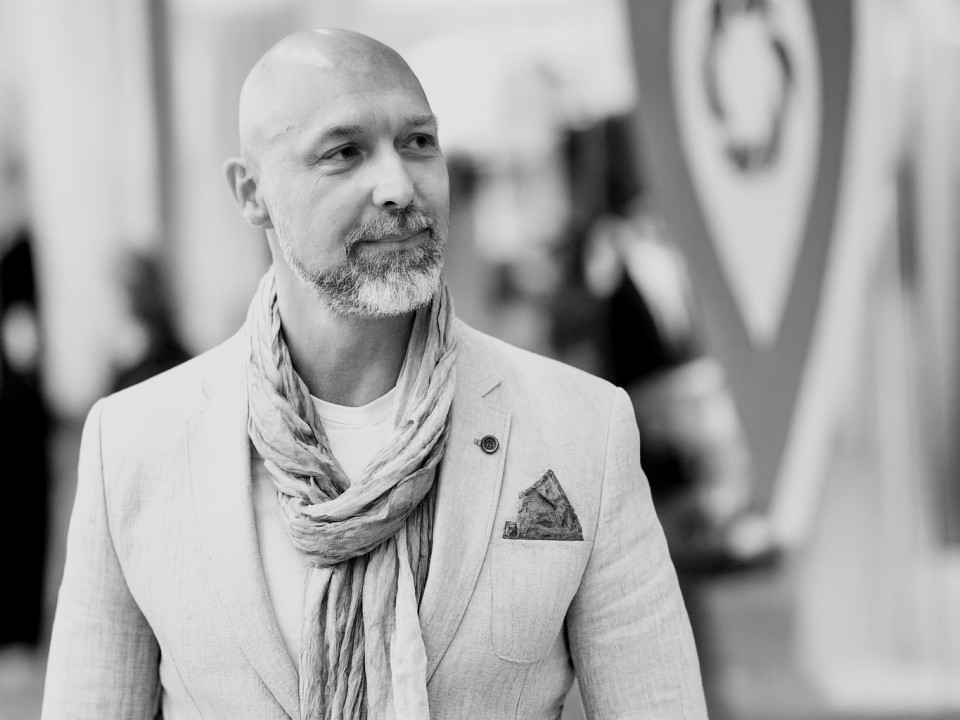
It’s not for everyone—and it’s not meant to be. It’s for those who want to be different.
According to Topinka, the Danubius Lofts project is designed for people who want to live differently. “This isn’t the kind of apartment someone buys without a relationship to architecture, because they wouldn’t fully understand it. They might be bothered by elements such as a cast-iron radiator or a concrete-finished ceiling,” he says. In his view, the living concept created here is ideal for bold individuals. “But in return for that boldness, they gain a distinctive and original home that offers a completely different spatial experience—one you won’t find anywhere else in Bratislava.”
Discover the full interview in audio form
How is exceptional architecture created? Listen to the full interview.
Discover Danubius Lots. Follow the transformation of an iconic industrial building in the heart of the city. The project is already coming to life—reconstruction is in full swing, gradually creating a modern space for living, working, and relaxing.